
Apa yang Anda Cari?

Bumbung rata biasanya digunakan untuk pemasangan solar komersial, perindustrian dan kediaman kerana ia menyediakan ruang fleksibel untuk sistem fotovoltaik. Tidak seperti bumbung condong, bumbung rata membolehkan pemasang melaraskan sudut kecondongan panel solar untuk penghasilan tenaga yang lebih baik. Memilih sudut yang betul adalah bahagian penting dalam reka bentuk sistem, kerana ia secara langsung mempengaruhi pendedahan cahaya matahari, kecekapan dan prestasi jangka panjang.
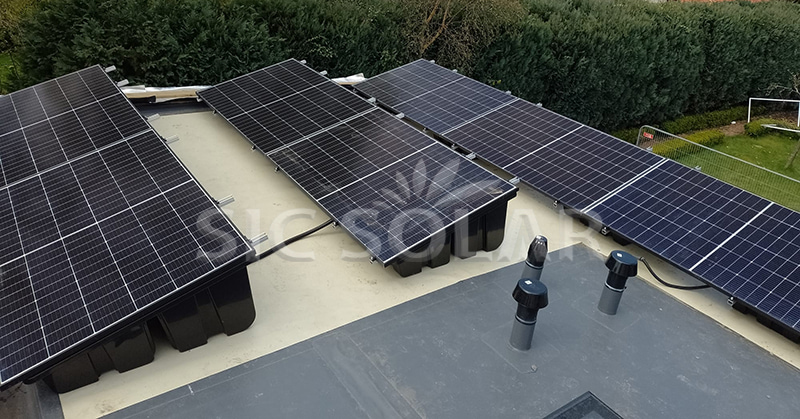
Secara amnya, sudut ideal untuk panel solar di atas bumbung rata bergantung pada lokasi geografi pemasangan. Garis panduan biasa adalah untuk menetapkan sudut kecondongan hampir dengan latitud tapak. Contohnya, jika lokasi berada pada latitud 30 darjah, panel solar sering dipasang pada sudut kecondongan hampir 30 darjah untuk memaksimumkan penjanaan tenaga tahunan.
Walau bagaimanapun, dalam aplikasi bumbung yang praktikal, sudut optimum tidak ditentukan oleh penghasilan tenaga sahaja. Faktor seperti beban angin, ruang bumbung, teduhan dan kos pemasangan juga mempengaruhi reka bentuk akhir. Disebabkan oleh pertimbangan ini, sistem solar bumbung rata sering dipasang pada sudut kecondongan yang lebih rendah, biasanya antara 5 dan 15 darjah, terutamanya pada bumbung komersial yang besar.
Sudut kecondongan yang lebih rendah memberikan beberapa kelebihan. Pertama, ia mengurangkan rintangan angin, yang penting kerana sistem bumbung rata lebih terdedah kepada daya angkat. Profil yang lebih rendah membantu meningkatkan kestabilan struktur dan boleh mengurangkan jumlah balast atau penambat yang diperlukan. Kedua, sudut kecondongan yang lebih rendah membolehkan lebih banyak panel dimuatkan pada bumbung dengan mengurangkan jarak yang diperlukan antara baris untuk mengelakkan teduhan.
Bagi pemasangan yang mengutamakan output tenaga maksimum dan ruang bumbung tidak terhad, sudut kecondongan yang lebih curam boleh digunakan. Sudut yang lebih tinggi boleh meningkatkan pendedahan cahaya matahari semasa musim sejuk apabila matahari berada lebih rendah di langit. Ia juga boleh membantu air hujan dan habuk meluncur keluar dari panel dengan lebih mudah, sekali gus meningkatkan prestasi pembersihan kendiri.
Orientasi panel merupakan faktor lain yang berkaitan dengan sudut kecondongan. Pada bumbung rata, panel boleh disusun menghadap selatan di hemisfera utara atau utara di hemisfera selatan untuk pendedahan cahaya matahari maksimum. Susun atur pemasangan timur-barat juga menjadi popular dalam projek komersial kerana ia membolehkan lebih banyak panel dipasang di bumbung dan boleh memberikan output tenaga yang lebih seimbang sepanjang hari.
Struktur pelekap memainkan peranan penting dalam mencapai sudut yang betul. Sistem kecondongan boleh laras membolehkan pemasang menyesuaikan kedudukan panel berdasarkan keperluan projek. Pengilang seperti SIC Solar menyediakan penyelesaian pemasangan bumbung rata yang direka untuk sudut kecondongan dan keadaan bumbung yang berbeza. Sistem mereka direka bentuk untuk mengimbangi keselamatan struktur, kecekapan pemasangan dan prestasi tenaga.
Kapasiti beban bumbung juga mesti dipertimbangkan. Sudut kecondongan yang lebih curam mungkin memerlukan struktur pemasangan yang lebih kukuh dan balast tambahan untuk menahan daya angin. Jurutera biasanya menilai kekuatan struktur bumbung sebelum memuktamadkan reka bentuk sistem. Ini memastikan pemasangan kekal selamat dan stabil dari semasa ke semasa.
Keadaan iklim boleh mempengaruhi sudut ideal selanjutnya. Di kawasan bersalji, sudut yang lebih curam boleh membantu salji turun dengan lebih mudah, sekali gus mengurangkan pengumpulan pada panel. Di kawasan yang mempunyai angin kencang, sudut yang lebih rendah selalunya lebih disukai untuk meminimumkan tekanan angkat.
Sudut terbaik untuk panel solar pada bumbung rata ditentukan dengan mengimbangi kecekapan tenaga, keperluan struktur dan ruang yang tersedia. Dengan sistem pemasangan yang betul dan reka bentuk yang teliti, pemasangan solar bumbung rata boleh mencapai prestasi yang andal dan penjanaan tenaga jangka panjang.



 IPv6 rangkaian disokong
 Melayu
  English
 Deutsch
 español
 português
 Nederlands
 العربية
 日本語
日本語 한국의
한국의 Tiếng việt